Showing posts with label MS3. Show all posts

Wednesday, 26 April 2017

MS3 - Production: Sample Evaluation


            Evaluation (750 word)                             

For my production piece I decided to create three television sitcom posters in order to represent American women in an idealistic way. I drew influence from my research project surrounding the popular sitcoms Desperate Housewives and Sex and the City. From my project I found that women are viewed merely for sexual gratification even in today’s apparent modern society. I wanted to illustrate this within my production work.

I viewed existing sitcom posters from the same genre and noted the conventions, themes and styles that I would later adopt in my own work. I found that I had to work closely with the mise-en-scene of each poster as the preferred reading of each visual text was to suggest ‘glamour’ and ‘perfection.’

For my first piece entitled ‘EvenJuicier’ I decided to create an enigma through the image. Only until the audience read the website credentials at the bottom do they know what sitcom the poster is promoting. This would mean that people who were not familiar with the programme or the genre may take an oppositional or negotiated view to the poster, however because of the bold iconography of the image it would immediately make the viewer look, even if they do not appreciate the genre. This I feel this was a successful decision and has been done deliberately to engage the viewer and focus the eye on the image so that the reader decides to look further. The iconography is strong, the red strawberry and lips give connotations of lust and sex, which a female audience will aspire to primarily as the passive male audience appreciates the image. I did this to highlight a point from Laura Mulvey’s theory of the Male Gaze that the camera in film, advertising and in fact any media is male. I used this theory within my research project and found that to engage my female target audience one also has to target the male audience as the camera has taken on the male perspective.

Again on my second poster the image was designed to match the title of the sitcom ‘Sex in the Suburbs’ which was subsequently layered on top of the image. The mise-en-scene was very important, as the image was to speak for itself, my model was dressed in 50’s clothing and her hair and make-up was immaculately done. I wanted to highlight this dated 50’s ideology in a modern society; therefore I chose to shoot my image within a kitchen. This was used in an ironic way to highlight another part of Mulvey’s theory to demonstrate the inequality in women and that these images similar to my own are not shocking but seem almost natural. Implemented within my work I also learnt how to use fragmenting within a shot. By focusing on her face and torso and slightly blurring out the rest of her body, this section of the body was emphasised in a sexual way helping re-enforce the message. Nevertheless I had to edit lighting into my shot because I did not have the means for natural or focused sunlight. I felt this was a negative aspect of my work and would have looked more natural if I was able to use lighting more effectively.

On my third piece I used four females to represent each character of the sitcom. I chose to create a mask on each of my characters, edit them to black and white and highlight each object they were holding in red. This is called equating women with objects, taken from the Male Gaze, and is mirrored in sitcoms such as Desperate Housewives and Sex and the City, where the central characters are placed with objects such as apples and knives to create the lustful, dangerous look. I did this to aim to attract my target audience of 18+ females, and therefore the male audience because of the sexual way it was shot. I had a positive response and successfully created a poster that attracted this demographic, as the audience were able to identify with the women in the poster.

All the characters in the posters are young attractive white females, and the text on each poster is seductive and risky, I feel that somebody from an ethnic background or an older audience may take an oppositional reading due to the narrative representations.

Another downfall to my production work would be that the characters used are not models or actresses therefore my posters may seem a little unrealistic especially when all the actresses are in the 18+ demographic range, therefore portraying the meaning successfully may be lost slightly as housewives, generally speaking, are older. One could argue however that the lack of real models and a lower age demographic could highlight the brutal reality of society’s ideals today, to re-enforce Mulvey’s theory that women have not overcome this patriarchal society but have simply conformed to it at an earlier age.
Nevertheless I felt my strengths shone through within my work, my ability to edit each photo through Photoshop using the spot healing brush to create a flawless look proved very successful. This was common to each piece to heighten the theme of ‘glamour’ and to appeal to the audiences so that they aspired to look like the characters. 

I feel that during the process of creating my production pieces, my original idea of using a laundrette as a background was too ambitious as to create these images successfully it had to look believable, and often poster sets are made to suit the occasion. If I was to create this effectively or to enhance my original posters I would need a better camera as posters like these are enlarged for billboards. I would also need a bigger budget in order to create sets and maximise lighting effects. Therefore by simplifying my ideas I feel I have created three unique posters that look professional, and give cohesion to my research project.

Tuesday, 25 April 2017

Methods for Analysing Media Representations


While students may have an intuitive sense of how the media represents certain phenomena, they need to learn some particular research techniques for how to analyze these representations. It is often useful to model these different techniques, demonstrating how you use them in analysis of a particular example.

The following are some steps involved in conducting studies, following by specific aspects associated with analysing representations:
  • Select a specific group, topic, issue, or phenomenon, and then discuss different representations of this topic/phenomenon in your texts.
  • Note patterns in these representations in terms of similarities in portrayals/images instances of stereotyping or normalising categories.
  • Note value assumptions in terms of who has power, who solves problems, how problems are solved.

Define the intended audiences for these representations:
  • What messages are conveyed to what audiences?
  • Whose beliefs or values are being reinforced or validated?
  • How are certain products linked to certain representations for certain audiences?

Define what’s missing or left out of the representation:
  • What complexities or differences are not discussed?
  • What is included and what is excluded?

Find alternative or counter-examples (this way you construct an argument)

Consider the potential consequences of stereotyped representations of gender, class, race, or age on people and the way they behave

List descriptions of others or oneself and note instances of stereotyping (how have values been altered)

Note how consumer practices reflect the need to live up to representations (aspirations)

In analysing representations, students can focus on the following aspects:

Images. The images employed that reflect certain positive versus negative value orientations based on cultural codes and archetypal meanings, for example, uses of dark or black colors to portray an urban area as dangerous or threatening (Lacey, 1998). In this semiotic analysis of representation, students are examining how the meaning of images as signifiers (wearing jeans vs. suits) creates certain signified or implied meanings (casualness/formality/dress for success).  (Cullin-Swan, B., & Manning, P. K., “Codes, Chronotypes, and Everyday Objects” )

These codes are culturally constituted. Stuart Hall (1997) cites the example of the meaning of traffic lights—the fact that the signified meanings of red and green are culturally determined based on a code system that indicates that in certain cultures, red means “stop” and green means “go.” The difference between red and green is what signifies the meaning based on the cultural code. To determine how images are representing a social or cultural world, you need to determine the code system underlying the media texts.

Sound/music. Media texts represent social worlds through the uses of sound or music. They may represent certain regions of the world by using music associated with those worlds, for example, Samba or Calypso music to represent South American worlds. These uses of sound or music are often based on audience’s prior knowledge of certain types of music as associated with certain types of experiences or worlds.

Intertextuality. Media representations also depend on audiences’ knowledge of intertextual links between the current texts and other previous texts using the same images, language, sounds, or logos. For example, understanding the Energizer Bunny battery ads, in which the Energizer Bunny suddenly appears at the end of an ad, requires a prior understanding of previous Energizer Bunny ads. Audiences understand the meaning of certain representations because they have knowledge of these intertextual lnks. They enjoy fact that they are “in the know” about the intertextual references being made. In analyzing media representations, you therefore need to determine the intertextual links being employed to previous texts, and how these links are being used to represent a world in a certain manner.

Dan Chandler’s discussion of intertextuality

Gunhild Agger, Aalborg University, Intertextuality Revisited: Dialogues and Negotiations in Media Studies

Language. In studying how language is used to represent experience, you are studying how language actually serves to create realities or worlds. The idealized language of advertising is used to create worlds in which flaws or problems are instantly dealt with or solved. The language of sports commentary is used to dramatize the significance of a game to keep viewers watching the game.

In defining these debates, you are also determining how audiences are being positioned to accept certain representations as “normal” or “common sense” constructions of reality. You may then describe how you are being positioned by these debates by asking the question: “What does this text want you to be or think?”

For more click here
 

Saturday, 15 October 2016

Scoop.it Resource Page


We have now set up a Scoop.it Resource page, that can be found in the right hand column, to blog any sites that may be of use for your A2 Media 'Research Investigation'.

This will also contain extra features and sources for the key texts.    

Common 'Research Investigation' Faults

  • Make sure you use quotes/statistics from your research
  • Make sure your research is from a wide variety of sources
  • Make sure you research the theory (include sources in Bibliography)
  • Make sure you apply the theory (use key quotes to support your points)
  • Analyse sequences from your texts to apply the theories in depth (don't generalise across a whole film/programme/CD etc be detailed and be specific)
  • Reference all sources of information in the 'Investigation' & Bibliography
  • Texts should be items (1) and (2) in the Bibliography
  • Use media terminology throughout (remember this is A2)
  • You have probably chosen an issue/topic because you know it exists or is valid - it needs to be remembered though that if you can't prove this through research, your viewpoint has no validity
If you look over your work and can't see evidence that you have covered the above, it is likely that your mark will be low. If you're still unsure then ask for help and guidance. The completed 'Research Investigation' (final draft) needs to submitted before we break for Christmas.

Friday, 14 October 2016

Further 'Research Investigation' Advice


Research Investigation Advice:

• In your introduction you should provide a thesis statement* which refers to the point(s) in the question, answering the question in this opening paragraph, if possible.

• You should progress (develop) your argument by building on key points from paragraph to paragraph. Directly referring to key aspects of the text in detail.

• Signpost new paragraphs clearly by leaving a line gap or indenting. You do not have to do both. Also, don’t be tempted to start a new line just because you are beginning a new sentence.

• Don’t digress: each of your paragraphs should be focused on the topic of the question. Use actual wording from the question from time to time so that you don’t go off the point.

Be logical: if you are deconstructing an advert, film sequence or narrative, discuss it in chronological order; focus on what happens at the beginning, then the middle, then the end.

• Use key arguments to make your points fluently and clearly. Phrases and connectives help you to make sense when discussing points in a text or linking ideas in and between paragraphs.

These will also help the reader to ‘navigate’ your essay. For example:

At the beginning of the film…
At the start of…
At first / firstly…

Later on in the text…
Further on…
Next we see…
Subsequent scenes…
Secondly…

As stated by....
An opposing argument suggests that....
Fans have stated that .....  "insert quote"
In terms of the uses & gratifications theory this means that.....
Reviews state that ...."insert quote"

At the end of the advert…
As the text draws to a close…
In conclusion / To conclude
Finally / My final point is…

Similarly / Likewise
In addition / additionally
Furthermore
Moreover
As well as this

However
Whereas
Whilst
Although
Even though

As a result
Due to (the fact that)
Since / Because
Consequently / As a consequence
Subsequently

Use the media terminology as a tool – to help you discuss the texts.

• Make sure you reference all quotes, theory and information thoroughly throughout your essay. Indent any quotations that are longer than 2 lines.

• Always write a conclusion by referring back to the main point(s) in the question.

• And finally, above all…if you are unsure of something, or uncertain about what you want to write, don’t write it. Keep your points simple in this case, and don’t try to use vocabulary that you don’t understand.

* A thesis statement is the statement that begins a formal essay or argument, or that describes the central argument of your discussion.

Wednesday, 30 September 2015

MS3/MS4 - Genre Theory

Genre Theory

Do genres in the cinema really exist and if so, can they be defined?

“Genres isn’t a word that pops up in every conversation about films or every review – but the idea is second nature to the movies and our awareness of them. Movies belong to genres much the way people belong to families or ethnic groups. Name one of the classic, bedrock genres – Western, comedy, musical, war film, gangster picture, science fiction, horror – and even the most casual moviegoer will come up with a mental image of it, partly visual, partly conceptual” (Richard T. Jameson, They Went Thataway, 1994, p. IX).

“The master image for genre criticism is the triangle composed of artist/film/audience. Genres may be defined as patterns/form/styles/structures which transcend individual films, and which supervise both their construction by the filmmaker, and their reading by an audience” (Tom Ryall, quoted by Stephen Neale, Genre, 1980, p. 7).

“…genre can be defined as a structural pattern which embodies a universal life pattern or myth in the materials of language… Genre is universal, basic to human perceptions of life” (John Cawelti, The Six-gun Mystique, 1975, p. 30).

As Barry Keith Grant writes in the introduction of his genre reader, “the work of defining film genres is surprisingly difficult and complex’” [1] because “…recognition of the importance of genre in the cinema is a relatively recent development….although chronologically it narrowly predates the early work of auteur criticism.” [2] Grant takes notice that until the late 1940s and early 1950s – when Robert Warshow and genre pioneer André Bazin wrote the first significant essays on film genre (about gangster movies and about the Western) – films were only distinguished by a phrase (for example, ‘a war movie’) “used as a convenient label to give one an idea of what the story was like, what to expect generally from a film.” [3] As before in literature, in painting and in other forms of art, “genre became a critical term, providing another conceptual framework for understanding movies.” [4] A genre classification can also double as a precise commercial study because it evokes certain audience expectations and therefore it allows one to establish classifications, comparisons, balance-sheets, valuations for the future and so on. Although it has been helpful for cinema studies, classifying films in accordance with their genre remains a difficult and risky endeavor because genre ‘impurity’ is by now, some twenty years after the solidification of genre study, a constant characteristic and a usual practice of the cinema as art and as industry.

Extract from: Offscreen.com

Tuesday, 29 September 2015

How To Analyse Genre: A Brief Introduction - 'The Western'


Genre theory is used in the study of films in order to facilitate the categorisation of films. Genre are dependent on numerous factors such as storyline, whom the director is, what are the audience expectations and what conventions are used.

In order to understand Genre we may look at several examples. When we analyse 'The Western' we may expect to find gunfights, horses and indians, the solitary cowboy and to some degree the actors and directors of such films (all regular conventions). They also expect certain content and a certain style of filmmaking (camera/setting/sound).

When analysing any type/genre of film it is important to recognise and discuss those elements that make it fall within a specific, or possibly a number of categories.  

Friday, 28 November 2014

Media Investigation tips (getting started)


Research Investigation: Grade Criteria/Boundaries


Here is a guide to the marking criteria for the 'Research Investigation'. You should notice that the marks are generated by:
  • The quality of your Research
  • The range of material sourced
  • Your ability to apply your research to your texts
  •  The ability to analyse your texts
  •  The ability to present the results in a clear and structured argument 
  •  Accuracy of written communication  
Note: Grade boundaries can be altered due to National averages

Tuesday, 7 October 2014

Essential Media Language: 'Research Investigation'


MS3 - Research Investigation Sample (Extract)


"To what extent do television transformation programmes influence their audience?"

I will be analysing the representation of women’s body image and the ideologies of what is seen to be “beautiful”, using research and my investigation, in particular reference to the two channel 4 programmes “How To Look Good Naked” and “10 Years Younger” to establish; to what extent these programmes have an impact on our society and how influential they are within their audiences.

Psychological research has shown that ‘body image’ ultimately does play a part in the lives of women yet there is an increasing trend of this effect in teenagers also. This viewpoint has been supported in a number of studies are suggests that: Teen-age girls who viewed commercials depicting women who modeled the unrealistically thin-ideal type of beauty caused adolescent girls to feel less confident, angrier, and more dissatisfied with their weight and appearance (Hargreaves, 2002). (1) Undoubtedly, this type of media has an effect on a women’s body image, it is an everyday occurrence and taken for granted, yet sadly today it is worrying as women have become more obsessed, unhappy and increasingly more depressed about their body hang ups.

The Channel 4 programme “How To Look Good Naked” usually consists of a woman who has hit rock bottom in terms of her body image and self esteem then, with the assistance of Gok, she experiences a series of events which result in a new contented and confident woman “Gok Wan presents the inspirational fashion series that shows women how to look fantastic with their clothes on or clothes off no matter what their body shape - and all without a surgeon's scalpel in sight...” (2) This reinforces a positive representation of women and an acceptable message being portrayed, in effect encouraging a passive response to self-awareness. It inverts the stereotypical viewpoint that thin constitutes beauty, as the show illuminates every aspect of the natural woman, they way they really are, bumps and lumps and all, and embraces it rather than dictating the way they should be, or the way they could change something to look better, it focuses on making the most of what you’ve got and being thankful for it. In this respect it a good example of TV programming that does not make it’s passive audience feel inferior or inadequate.

I looked closely at the episode of season 3 episode 15 featuring a woman called Kelly; she had been through breast cancer and as a result of treatment was left with only one breast. She has been planning to get married but is so low in terms of self esteem she can’t bring herself even try on a wedding dress. The presenter is Gok Wan stylist to the stars, Takes Kelly to a wedding fare and uses language like“I’ve got to prove to Kelly she will be a Babylicious bride “(3) By just using the word “prove” this directly suggests that she already is beautiful she just needs help seeing it, which ideally is the whole message of the show. He is kind and encouraging and never judgmental, preferring to apply more positive manipulation of a passive audience rather than a negative. Focusing on every good aspects of the woman whether it be their killer legs or fantastic breasts boosting their self believe in the hope of erasing the idealization that seems to have been mediated into their minds. People with a preferred reading of the show would really identify with it on a personal level and may be even try to incorporate these qualities into their lives and from this personal level they get a gratification from it like a companionship from Gok. Also this may encourage a comparable reaction within peer groups who pass the information from friend to friend. Similarly I take a hegemonic approach but rather than passively and excepting its codes I can actively see the deeper message the programme is trying to portray.

By using statements like; “she is going to be the most gorgeous blushing bride!”(4) and going through little things like a line up of women that also had breast cancer, reinforces a positive attitude to self empowerment. Kelly gradually builds her self esteem bit by bit changing , from using statements like “I look horrible” (5) to “she said I had a beautiful face, how does that feel ?, that feels lovely… I look nice don’t I, really girly and sexy” (6) inevitably there is a transformation, not physically yet mentally, because she was fine the way she was. Active audiences may also see that even though there is manipulation it is not at a superficial level but more psychological and therefore more likely to last.

* This is a partial extract of a Research Investigation and should only be regarded as a guide.

Wednesday, 2 April 2014

MS3 - Evaluation: Guidance


  • Refer to your 'Research Investigation' and how it has informed your production choices - Within my Research Investigation I examined ........ and the issue of........I discovered that.......
  • Show an awareness of your audience needs - mode of address/age/gender/representation etc - what form? (teaser poster/full promo poster/CD cover/Magazine/trailer)
  • Use media language throughout - genre/conventions/representations/image/connotation/mode of address/masthead/colour palette/enigma codes
  • Refer to media theory when applicable - Mulvey/Uses & Grats/audience gratification/representation
  • Highlight key strengths of the production
  • Highlight any weaknesses of the production
  • Refer to, describe and make direct statements concerning your production texts
  • Include images of your production texts within your evaluation (750 words)

Thursday, 7 November 2013

The evolution of fairytale heroines in film


Representation

Today's screen princesses have come a long way from the Disney damsels of old, but Joan of Arc still sets the bar high.

It's been a great year for warrior princesses at the movies – even better if they come bearing bow and arrows. First we had Katniss Everdeen, as incarnated in the svelte, fearless form of Jennifer Lawrence, eyes narrowing as she strung her bow and sent The Hunger Games $672m into the black.

Katniss was followed by Snow White, as played by sullen beauty Kristen Stewart, her sword slicing the air to save the kingdom of her late father and topple The Avengers from the top spot at the box office. And now we have Pixar's Brave, boasting the studio's first female heroine, flame–haired, cinch-waisted Princess Merida, "dear and bonny and lovable, the face beautiful, and transfigured with the light of that lustrous intellect and the fires of that unquenchable spirit".


So wrote Marc Twain of Joan of Arc but he could as easily have been describing the new breed of warrior princess riding, fighting, shooting, scything their way across our screens. As Sasha Stone commented at Awards Daily, "it's hard not to look at 2012 and not declare it the Year of the Girl". Although these feisty female role models have not met with universal approval. Merida could have used "a few more pixels in her waist", complained Peggy Orenstein, author of Cindarella Ate My Daughters: Dispatches From the Front Line of the New Girly-Girl Culture. "Merida doesn't really grow," pointed out Mary Pols in Time, "She's simply extended her time as a tomboy, another archetype, less a girl than a stereotype of a kind of girl."

Certainly, Disney princesses have been ploughing the feisty furrow for some time, at least since Princess Jasmine ran away from home rather than be married off at her father's behest in 1992's Aladdin. Jasmine, Pocohontas and Mulan were all touted, in their time, as "new", "empowered" Disney heroines who refused to sit at home plaiting their hair waiting for their prince to come. Clearly, some stereotypes are better than others, although even calling "stereotypes" in a Hollywood movie is a fraught activity, given that the semantic overlap between that and what most screenwriters would call "characterization". Either way, we have come a long way from the days when Snow White could arrive at the seven dwarves' home and immediately start house-cleaning without a word of complaint.

In a study conducted at the University of Connecticut, Dawn England and Lara Descartes divvied up the screen time of all eight Disney Princess into three categories: "domestic work", "interacting with animals", and "other". They reached the following conclusions:
"Princesses performing domestic work was only portrayed in the first three princess movies and again briefly in Pocohontas. However in the first two movies it occupied a significant amount of time. Time spent interacting with animals was very prevalent in the first four movies decreased slightly in the next three, and then significantly increased in Mulan."
In Pocohontas' defence, it should be pointed out that teepees get messy very quickly without regular housecleaning, and that Mulan was accompanied throughout much of the film by a red-and-orange Chinese dragon voiced by Eddie Murphy, who is better better classified under "comic relief", perhaps, than "interacting with animals". But no matter – onto the princes, whom they scored for personality traits ranging from "assertive" to "troublesome" then comparing them with the princesses' scores:
"The princesses were significantly more likely to be cooperative, nurturing, tending to their physical appearance, and troublesome. While the princesses were not likely to be portrayed as physically strong, unemotional, or inspiring fear, these characteristics were more common among the princes. The princes were least likely to tend to their physical appearance."
(Here Brave scores very highly, some of its strongest jokes coming at the expense of the young Scottish lords all vying for Merida's hand – a rogue's gallery of narcissists, boneheads and tennis-pro preeners.)
"The princes were action-oriented, often performing the climactic rescue that brought the conclusion of the movie. Over time the princesses' roles changed form being completely passive or asleep during the final rescue to assisting the princes."
"Asleep" seems a little harsh on Sleeping Beauty – the poor girl had hardly nodded off – but perhaps the most surprising observation was this:
"Among the princesses, assertiveness was more common in earlier films and fearfulness and tentativeness were depicted more often in later films."
Huh. The modern princesses are more fearful and less assertive than their predecessors. And yet, at the same time, they lead the action more and need rescuing less. What's that about? After much mulling on the matter, it occurred to me that this might be a side effect of greater psychological verisimilitude coupled with the old Hemingway paradox about the brave man not being the man without fear but the man who feels fear and still acts. The princesses are showing more fear because they were doing more.


It certainly explains why these films have been such hits, even with boys. Female protagonists means greater asymmetry of battle (they are outmatched) means greater suspense (they could lose) means bigger thrills (they must keep their wits about them). Snow White and the Huntsman boasted enough swords, scimitars, axes, and snares to keep a horde of Hobbits busy for a month of Sundays, drawing the admiration of none other than James Franco who chivalrously defended Stewart's performance from its detractors, "she has worked her ass off. Whatever Snow White may be, Kristen is a warrior queen. Give her the crown." Or, as Twain said:
"Supremely great souls are never lodged in gross bodies. No brawn, no muscle, could endure the work that their bodies must do; they do their miracles by the spirit, which has fifty times the strength and staying power of brawn and muscle. The Napoleons are little, not big; and they work twenty hours in the twenty-four, and come up fresh, while the big soldiers with the little hearts faint around them with fatigue. We know what Joan of Arc was like without asking– merely by what she did. The artist should paint her spirit – then he could not fail to paint her body aright."
guardian.co.uk: 29/6/12 

'The Perfume Ad Formula' @ Visual Culture Blog

Click image to access
Extract:

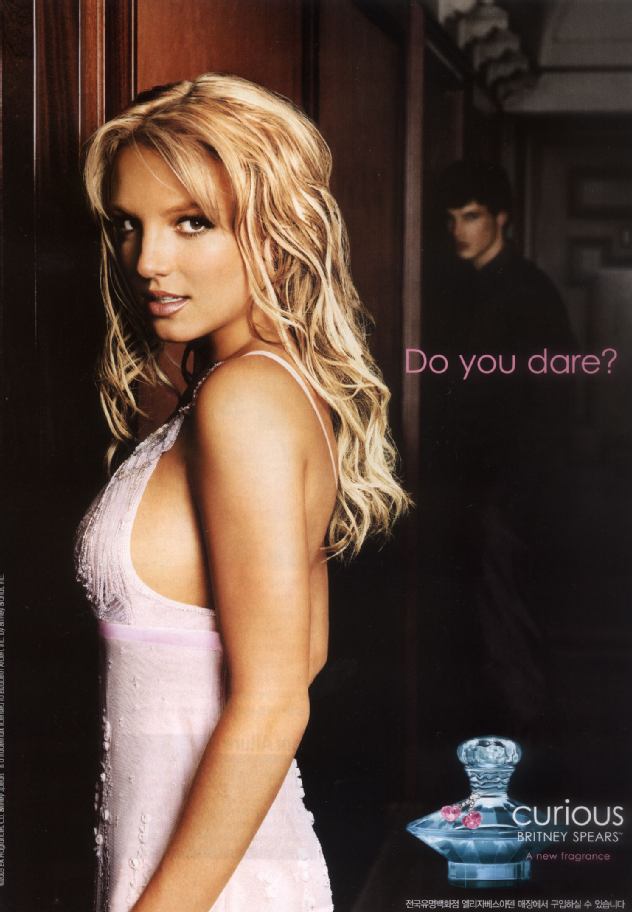
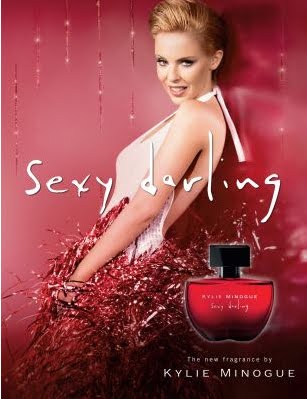
Another theme explored in the perfume ad formula is the celebrity returning a gaze back to the spectator over her left shoulder. The pose is strongly suggestive of photographs taken on the red carpet in which the celebrities twist and turn to present their dresses to the assembled photographers. While Kylie Minogue is simply referred to as ‘Sexy Darling’, this emphasis on exhibitionism and a visual encounter with the celebrity is further stressed in Britney Spears’ ad for Curious. A man can be seen in the background to the photograph looking at Spears, while Spears herself is suggestively looking at the spectator. The slogan ‘Do you dare?’ further underlines a sexual element to the representation of gender, as if the spectator is invited to join the subjects into a hypothetical ménage à trois via the gaze.


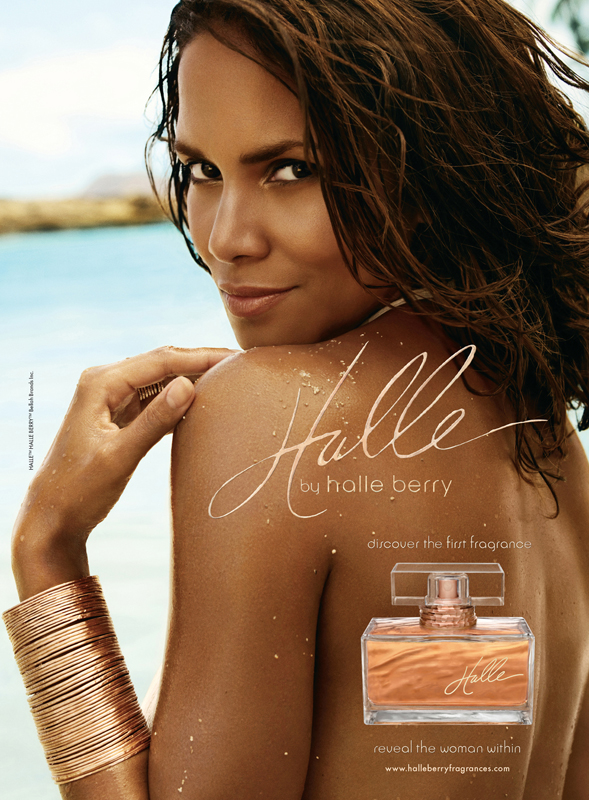
Halle by Halle Berry and Eva by Eva Longoria also submit to the perfume ad formula of celebrity returning a gaze back to the spectator over the left shoulder. In both cases, the name of the perfume is the first name of the celebrity herself, whereas the name is written in such a way that it looks like the celebrities’ signature. This is an important element in the ad since, as it appears, the perfume is not only endorsed by the celebrity, but rather, it’s created by the celebrity herself. Like the artist signing his artwork, the celebrity signs her creation. I am using the word sign in the semiotic sense – the sign as a signifier. Here the signature signifies the celebrity’s assumed personal affiliation, even creation, of the perfume.


Sunday, 27 October 2013

Research Investigation: Guidance & Deadline 


Candidates are required to undertake an individual investigation into a specific area of study focused on one of the following concepts: genre, narrative or representation.
This MUST involve RESEARCH which draws upon a range of both primary and secondary sources. Reference approximately 15-20 sources!!!! - not just the internet.
Primary resources
Detailed Scene/Image/lyrical analysis. For example of detailed primary analysis would be the James Bond scene we analysed in class in regards to representation of females.
Secondary resources
Academic books, online research, magazines, documentaries , Media Theory,
You are not the first people to write about these issues. Read, it will inform your own views and give you content you may not have considered. Remember to quote to demonstrate your research. Also ensure you use the information you have read and apply it to your own texts, your specific question. That could be done in your commentary about the quotations. It could back up a statement you have made. Make sure the theories you have chosen help in answering your question.
Media Terminology
Ensure you use the correct terminology/language at any appropriate opportunity
Bibliography/Referencing
Make sure any quotations or references used in your investigation are numbered chronologically.
For example. “quote” (1)  Then within your bibliography you will write;
For Books
Surname, initial,  year, book title, publisher
Website
Surname, initial, year, web address
Text (film, music video, song, scene)
Title, type of media, director, specific time and duration. You can include images/screen shots within the content section of your essay to help explain your points.
Word Count 1800 words

1 Page Draft Deadline 25/10/13

Research Investigation: Mark Scheme (Grade A-C)


*To achieve the highest grade WIDE RESEARCH 'MUST' be undertaken*